

Rubik's Cube Robot
- In stock with stable lead times — single units or complete sets
- Size, appearance and interaction can be adapted to the museum’s theme
- For science museums, campus science rooms, community science centers and mobile science museums
- Export packing and overseas on-site installation support
Rubik's Cube Robot Solving Rubik's Cube Robot Science Museum Exhibitions Introduction Science Exhibitions
Shanghai Inertia, the original supplier of campus science museum and community science popularization equipment
The robot of this exhibition item can recognize and calculate the Rubik's Cube that has been disrupted by visitors, and restore it in the shortest possible time. At the same time, it is possible to interact with visitors through voice function and teach them how to solve Rubik's Cube. Equipped with a display screen, showcase the scientific principles of the Rubik's Cube robot in a fun animated format. Shanghai Inertia Automation Co., Ltd., a manufacturer of science museum robots, reminds everyone that the exhibition items interpret the robot's visual recognition detection and digital processing technology, as well as flexible robotic arm control technology from an interactive perspective. In addition, there are multifunctional replaceable robotic arms.
The Rubik's Cube Robot consists of two parts. The robot can interact with visitors, restore the Rubik's Cube that visitors have scrambled after purchasing from the Future Mall, or replace the robotic arm for calligraphy performances.
Sensors on the Rubik's Cube Robot:
The sensor on the Rubik's Cube robot is a detection device that can sense the measured information and convert it into electrical signals or other required forms of information output according to certain rules to meet the requirements of information transmission, processing, storage, display, recording, and control.
The function of the sensor:
The functions of sensors are often compared to the five major sensory organs of humans:
Pressure sensitive, temperature sensitive, and fluid sensors are like human touch
Gas sensors are like the human sense of smell
Light sensitive sensors are like human vision
Sound sensitive sensors are like human hearing
Chemical sensors are like human taste buds
Characteristics of sensors:
The characteristics of sensors include miniaturization, digitization, intelligence, multifunctionality, systematization, and networking. They not only promote the transformation and upgrading of traditional industries, but also have the potential to establish new industries, thus becoming a new economic growth point in the 21st century. Miniaturization is based on the technology of microelectromechanical systems and has been successfully applied to silicon devices to make silicon pressure sensors.
The proximity sensor engineering project is a general term for sensors that replace contact detection methods such as limit switches and aim to detect objects without contact.
The proximity sensor engineering project is a very important member of the sensor family and is widely used in industry. Although the price of a single proximity sensor is not very high, most factories require it in bulk, so there is also a large market for proximity sensors. When it comes to proximity sensors, everyone knows well-known brands such as Turck, Omron, Baruff, etc. These sensor brands have occupied a large market for proximity sensors for a considerable period of time.
Previously, domestic proximity sensor engineering projects mainly relied on imported brands such as Turck, Omron, and Baruff. Imported proximity sensors were expensive and had long supply cycles, which could not meet the needs of many customers. Many domestic factories hoped to find domestically produced proximity sensors. In this situation, many sensor manufacturers began to produce proximity sensors. Shanghai Inertia Automation Co., Ltd., a science museum robot manufacturer, reminds everyone that initially they introduced foreign machines and talents to imitate imported proximity sensors. However, with the development of sensor technology in China, there are now many independent brand proximity sensors that can largely meet domestic needs.
At present, many factories in China are using domestically produced proximity sensors or are trying to use domestically produced proximity sensors. Proximity sensors no longer rely on imported brands.
Application of sensors:
Sensors are widely used in various fields of social development and human life, such as industrial automation, agricultural modernization, aerospace technology, military engineering, robotics technology, resource development, ocean exploration, environmental monitoring, security, medical diagnosis, transportation, household appliances, etc.
According to the "Analysis Report on the Development Prospects and Investment Forecast of China's Sensor Manufacturing Industry" released by the Forward Industry Research Institute, in recent years, domestic sensor applications have mainly been distributed in the fields of mechanical equipment manufacturing, household appliances, scientific instruments and meters, medical and health care, communication electronics, and automobiles.
People must rely on sensing organs in order to obtain information from the outside world. But their functions in studying natural phenomena, laws, and production activities are far from sufficient. To adapt to this situation, sensors are needed. Therefore, it can be said that sensors are an extension of human facial features, also known as electrical features.
With the arrival of the new technological revolution, the world has entered the information age. In the process of utilizing information, the first thing to solve is to obtain accurate and reliable information, and sensors are the main way and means to obtain information in the natural and production fields. The particle world requires observing the evolution of celestial bodies for hundreds of thousands of years vertically, with reactions as short as seconds.
In addition, various extreme technology research has emerged that plays an important role in deepening material understanding, exploring new energy, new materials, etc., such as ultra-high temperature, ultra-low temperature, ultra-high pressure, ultra-high vacuum, ultra strong magnetic field, ultra weak magnetic field, etc. Obviously, it is impossible to obtain a large amount of information that cannot be directly obtained by human senses without suitable sensors.
Many obstacles in basic scientific research lie in the difficulty of obtaining object information, and the emergence of new mechanisms and high-sensitivity detection sensors often leads to breakthroughs in this field. The development of some sensors is often a pioneer in the development of some edge disciplines.
Sensors have already penetrated into a wide range of fields such as industrial production, space development, ocean exploration, environmental protection, resource investigation, medical diagnosis, biotechnology, and even cultural relic protection. It can be said without exaggeration that almost every modern project, from the vast space, to the vast ocean, to various complex engineering systems, cannot do without various sensors.
It can be seen that the important role of sensor technology in developing the economy and promoting social progress is very obvious. Countries around the world attach great importance to the development of this field. Science Museum robot manufacturer Shanghai Inertia Automation Co., Ltd. reminds everyone to believe that in the near future, sensor technology will make a leap and reach a new level commensurate with its important position.
Related exhibits
These come from the same product line, so they can be combined into one gallery — dimensions, colours and interaction level specified to match.

下棋机器人
Automation and Central Control
射箭机器人
Automation and Central Control
冰球机器人
Automation and Central Control
浮球矩阵
Automation and Central Control
水滴之舞
Automation and Central Control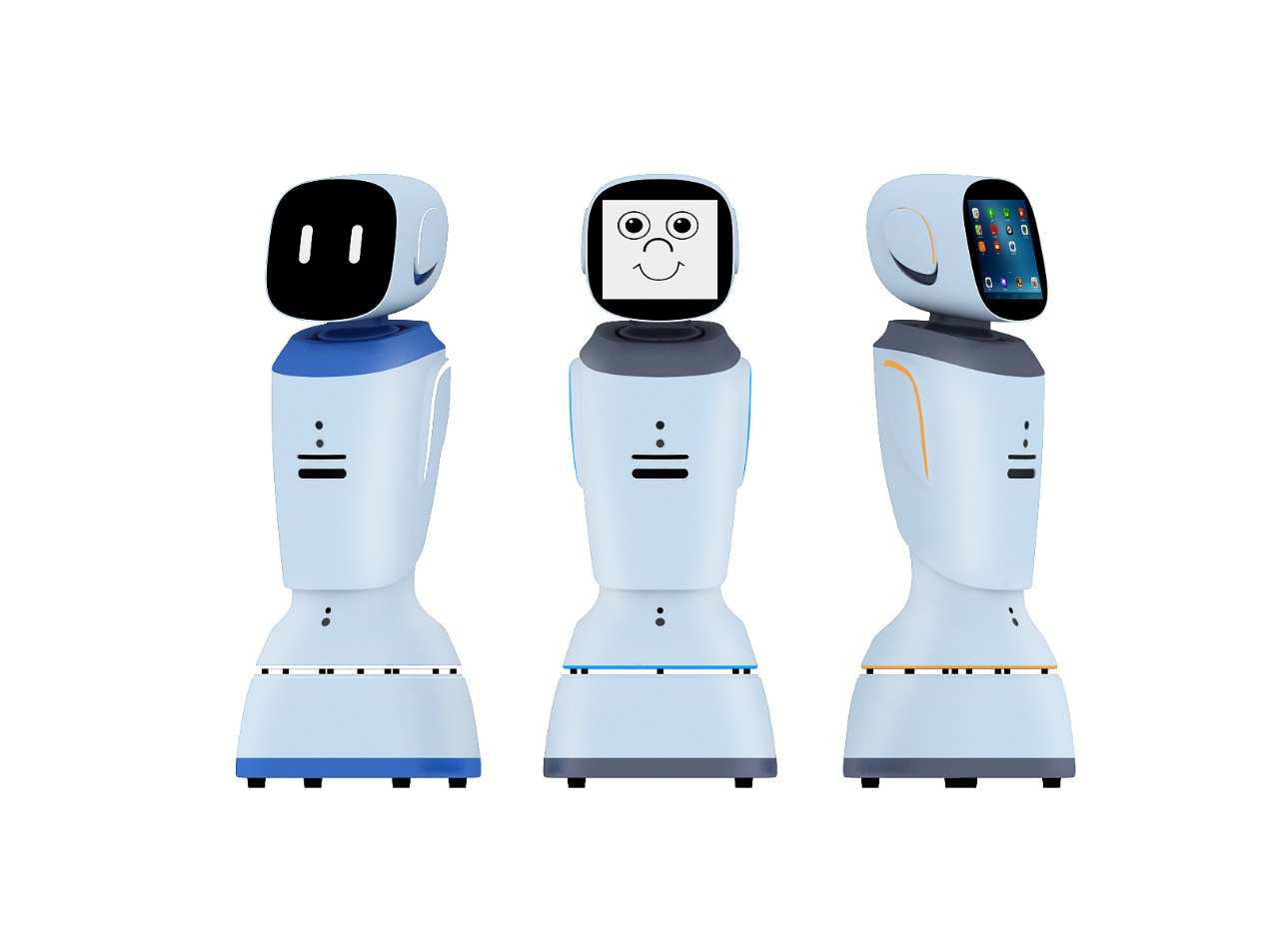
迎宾机器人
Automation and Central ControlNeed to combine these into one gallery? Send us the floor plan and we will return a layout and a price. Request a layout