

Coriolis force
- In stock with stable lead times — single units or complete sets
- Size, appearance and interaction can be adapted to the museum’s theme
- For science museums, campus science rooms, community science centers and mobile science museums
- Export packing and overseas on-site installation support
Exhibition Name
Coriolis force
Science Behind It
It consists of an orange red sheet metal base and box, a warm white anti duplication plate tabletop, a metal disc, an organic glass protective cover, a pulley, a belt, a rotating mechanism, a leakage protector, a power module, a motor, a metal button, and an instruction board.
Inertia is an inherent property of an object. The belt maintains a linear motion at the beginning of its movement. When the bottom turntable begins to rotate, the belt tends to continue its linear motion. However, due to the rotation of the system itself, the positions of particles in the system will change after a period of motion. Therefore, when the direction of the belt's axial movement is the same as the direction of the disk's movement, the belt between the two axes protrudes outward; When the two movements are opposite, the belt between the two shafts is concave. The displacement of particles moving in a straight line in this rotating system relative to the rotating system is classified as the effect of Coriolis force.
Dimensions
Specification: Exhibition size 700mm × 700mm × 988mm; The overall size of the booth is 700mm × 700mm × 800mm, the size of the sheet metal base is 550mm × 550mm × 105mm, the size of the sheet metal box is 500mm × 500mm × 683mm, and the size of the anti double special plate tabletop is 700mm × 700mm × 72mm;
Power requirement: AC220V 50Hz; Power 100W;
How to Operate
Press the 'Start' button, and the belt will start rotating and remain parallel. Use your hands to rotate the large disc at the bottom in both forward and reverse directions, and observe the differences in the condition of the belt.
Rendering or physical photo


Related exhibits
These come from the same product line, so they can be combined into one gallery — dimensions, colours and interaction level specified to match.

哪个滚得快
Campus Science Museums
泡泡幕
Campus Science Museums
无源之水
Campus Science Museums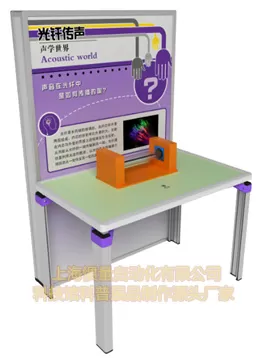
光纤传声
Campus Science Museums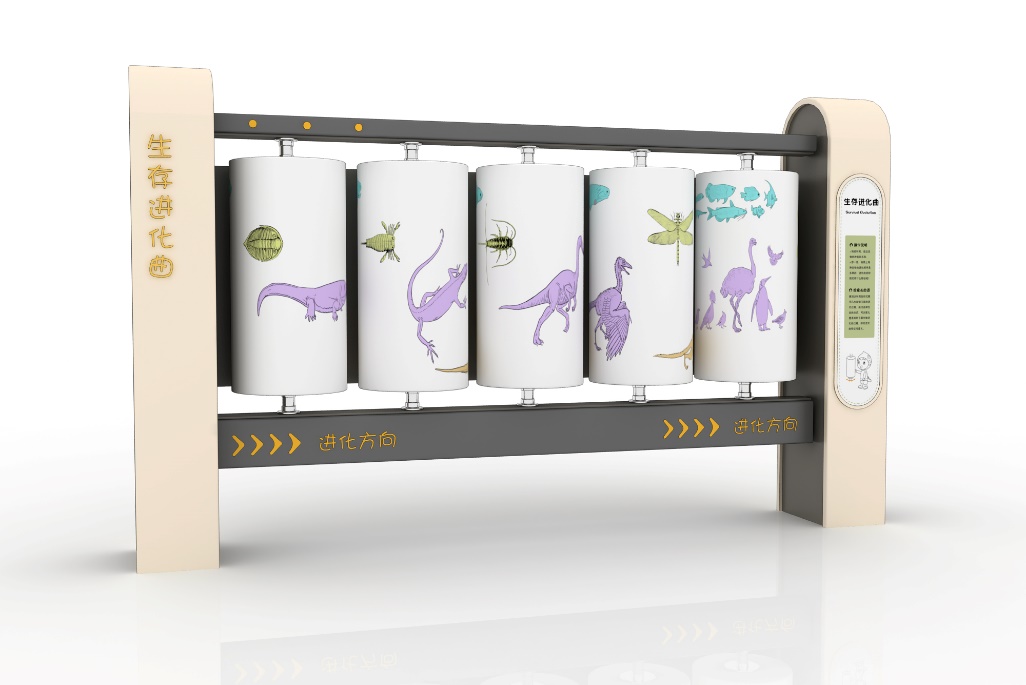
生存进化曲
Campus Science Museums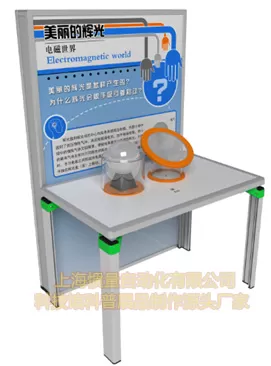
美丽的辉光
Campus Science MuseumsNeed to combine these into one gallery? Send us the floor plan and we will return a layout and a price. Request a layout