
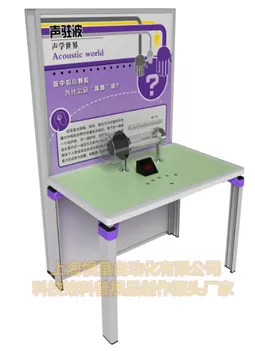
Acoustic standing wave
- In stock with stable lead times — single units or complete sets
- Size, appearance and interaction can be adapted to the museum’s theme
- For science museums, campus science rooms, community science centers and mobile science museums
- Export packing and overseas on-site installation support
Exhibition size: 1.20 * 0.91 * 1.80 (m)
Operation instructions: Press the demonstration song button or operate the frequency selection button to select different frequencies. The horn emits different sound waves to observe the vibration of particles inside the organic glass tube at different frequencies, and observe the changes at the maximum amplitude and zero amplitude. Function overview: exhibits consists of speakers, plexiglass tubes, foam particles, frequency displays, operation buttons, etc. The organic glass tube is filled with solid colored particles, and one end is connected to a horn to form a sealed space for displaying sound standing waves. By operating the button and selecting different frequencies, the horn emits different sound waves. The incident sound waves propagate from one end of the organic glass tube to the other, producing reflected waves. At a specific frequency, the incident and reflected waves superimpose to form standing waves. The point with the highest amplitude is called the antinode, and the point with the lowest amplitude is called the node. When adjusting the frequency of the sound source, the digital display synchronously displays the current sound frequency, and the position and vibration amplitude of the antinodes and nodes change accordingly, forming a phenomenon that appears to be small particles dancing.
Scientific principle: Why do small particles in the tube dance? Because the incident sound wave emitted by the horn is reflected at the other end of the tube, forming a reflected wave. At a specific frequency, the incident wave and the reflected wave overlap to form a standing wave. The point with the maximum amplitude is called the antinode, and the point with the minimum amplitude is called the node. When adjusting the frequency of the sound source, the position and vibration amplitude of the antinodes and nodes change accordingly, forming a phenomenon that appears to be small particles dancing. Standing waves have important applications in disciplines such as acoustics, optics, and radio, as they can measure wavelength or determine the natural frequency of vibration systems.
1. Main configuration of materials for exhibitions:
Demonstration particles: polytetrafluoroethylene foam particles, diameter Φ 1. Demonstration device bracket: 304 stainless steel electrical main configuration: ① Leakage switch: Chint DZ47LB-32 C16 pole number: 2P+N; Release current: 16A; arc extinguishing medium: residual current circuit breaker; Breaking capacity: 6KA ② Switching power supply: Mingwei NES-35-24 Input AC220V, Output DC24V, Power 35W ③ 6 buttons: Red wave button GQ25-11E Installation hole size Φ 25; Working voltage 250V; Working current: 5A; Rated heating current: 10A; Mechanical lifespan: 1 million cycles; Head protection level: IP65; Protection method: Waterproof. ④ Speaker: 40W 5-inch Dongguan sound speaker ⑤ PLC control system: FX2N-32MR output input form: relay output; Total number of inputs: 16 points; Total output: 16 points; Expansion: possible; Working power supply: DC 24V Energy requirements: AC220V 200W 2. Main materials for the exhibition booth: ① Exhibition booth: customized shaped surface sandblasted aluminum parts, aluminum alloy profiles, two-way plug injection molded parts ② Table top: 12mm ceramic panel (white), 16mm wooden board, injection molded table edge ③ Instruction board: customized aluminum alloy skeleton, 8 injection molded part connections, 5mm solid wood board, 3mm aluminum board, bright photo on the surface of the wood board, transparent acrylic polished and UV painted ④ Table top fixing parts: powder coated die-casting aluminum parts, national standard connectors and fasteners
Video demonstration explanation:
Related exhibits
These come from the same product line, so they can be combined into one gallery — dimensions, colours and interaction level specified to match.

人体发声
Campus Science Museums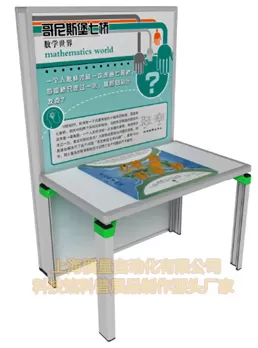
哥尼斯堡七桥
Campus Science Museums
手眼协调
Campus Science Museums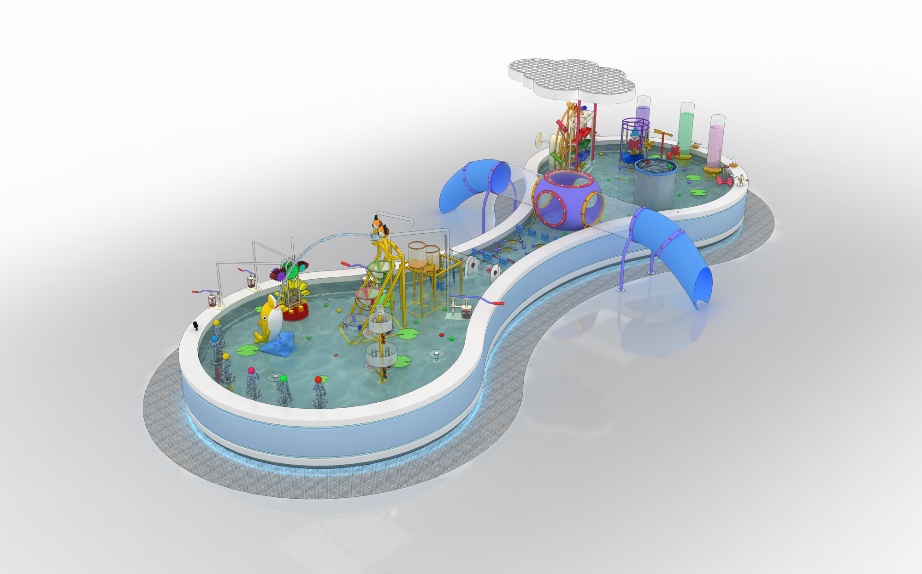
戏水池(一组12件)
Campus Science Museums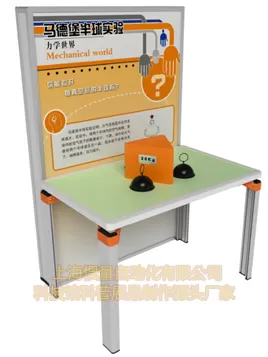
马德堡半球实验
Campus Science Museums
阿基米德螺旋泵
Campus Science MuseumsNeed to combine these into one gallery? Send us the floor plan and we will return a layout and a price. Request a layout